


Innovation and sustainability are closely linked as innovation drives the development of new solutions to address environmental, social, and economic challenges, promoting long-term sustainable practices. By integrating sustainability into innovation strategies, businesses not only reduce their environmental impact but also tap into new market opportunities and drive long-term growth.
With the shift in requirements for sustainable reporting, there is a focus from Government to innovate supply chains to help lower emissions. In 2024, the Federal Government came out with the Environmentally Sustainable Procurement Policy (ESP Policy). This policy specifically asks for suppliers to provide an explanation of innovation within its own business. The government has targets of meeting zero carbon by 2050, and one way they are focusing on is their supply chain on their projects. Now, is zero carbon really achievable? That is a whole other article, however innovation can assist in resource and emission reductions.
When talking to suppliers about innovative ways to reduce their use on resources, they often overlook internal processes that have made their business more effective. In sustainability, we love looking at these processes. An example from a previous project, the team developed a rail consist that completed the process of drilling, inserting joints and laying piping all at the same time. The result was saving time in the program and reducing the need for another consist. Which type of innovation do you think that would fall under in the list below?
According to research by Doblin, whose book Ten Types of Innovation: The Discipline of Building Breakthroughs (2013), talks about how most breakthroughs do not arise from ground-breaking engineering feats or rare discoveries. Instead, Doblin identified in the 1990’s, ten distinct types of innovation that businesses can leverage to achieve competitive advantages.
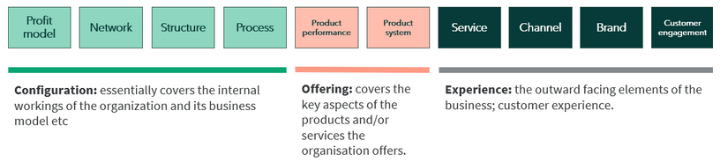
Doblin’s research categorised innovation into ten types, providing a strategic framework for businesses to analyse competition and identify new opportunities:
- Profit Model: Innovating in how a business generates profit, such as using subscriptions, auctions, or licensing models.
- Networks: Leveraging partnerships, other companies’ processes, or technology to create value.
- Structures: Innovating internal organisational design, incentives, and communication to improve performance.
- Processes: Enhancing internal processes for more efficient product and service delivery.
- Product Performance: Improving product quality, features, and value for users.
- Product System: Creating systems where complementary products or services work together (e.g., product bundles, platforms).
- Service: Enhancing customer experience and support to add value to a product or service.
- Channel: Innovating the methods used to deliver products to customers, such as e-commerce or pop-up stores.
- Brand: Building a strong brand identity to stand out in the market, through co-branding or transparency.
- Customer Engagement: Deepening relationships with customers by connecting with their aspirations and creating memorable experiences.
Combining innovations across these areas can significantly boost a company’s competitive advantage and success. Have you introduced new machinery that creates a product in less time? Have you streamlined your processes to use recycled water? Have you changed a process to include the manufacture of sustainable products? These examples can be classed as innovation and can be captured in your sustainability strategy on ways the business has reduced its resource use and carbon emissions.